I'm generally a fan of the Explainer and Medical Explainer columns on Slate.com. I feel like the Medical Explainer column is one of the most accessible forms of news about medically-relevant studies out there for a general audience. Today's installment fits that mold; this one is about the case for the importance of breakfast.
Most of us grew up being told that breakfast is the most important meal of the day, and that skipping it would lead to all sorts of problems, ranging from gaining fat to impaired mental functions. The problem is that the underlying data is merely a lot of association studies. People who skip breakfast are more likely to gain weight than people who don't skip breakfast. It could be that skipping breakfast results in weight gain, but it's also possible that people who are likely to gain weight are more likely to skip breakfast. Perhaps people who skip breakfast are dieting, and thus likely to be gaining weight (as most people go on diets because they have been gaining weight). Perhaps they are experiencing higher levels of stress, and aren't eating breakfast in order to save time. Etc. There are a lot of potentially confounding factors.
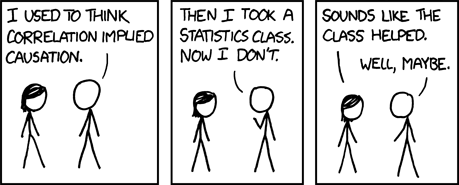
(Image courtesy of xkcd)
What could help us figure out a causal link would be a randomized trial, where individuals are told to either eat breakfast or not, and then monitored over time. This is a more expensive method of performing a study, but would reduce the other confounding differences between those who eat breakfast and those who don't.
As this article correctly points out, there is potential harm to continuing to report a standard piece of received wisdom which hasn't been properly tested. It could be that breakfast is irrelevant, but stressing that people should eat it crowds out other information that would be useful. Or, as something I'd like to point out, it's also possible that this could trigger decision fatigue. That is, if you need to make a lot of decisions, you're likely to agonize more about earlier ones on your list than later ones. So if you're the sort who doesn't like to eat breakfast, but you make yourself do it, you're exerting willpower to (you think) be virtuous -- and that virtue may make it harder for you to resist the midnight snack that you think is likely to screw up your diet for the day.
In summary: correlation does not equal causation. We scientists keep saying that, hoping that eventually others will integrate this into their thinking. We could well be wrong, but we hope so anyway. Eat or don't eat breakfast as makes sense from your own experience; the data backing the importance of breakfast is less settled than you probably think.

No comments:
Post a Comment